
"Zhu Gu La"
9000 article(s) found

Starbucks is protested by Chinese people that coffee is more expensive than abroad in the Chinese market.
The scene caused Chinese people to complain, but Starbucks responded, saying that they were valuable in China. According to the description of the relevant media, Miss Zhu ordered a small latte in the United States with a list price of $2.75. After adding about 8% consumption tax, Miss Zhu paid a total of about $3, equivalent to 18 yuan, while in a Starbucks store in Shanghai, a small cup of latte label

Yunnan Zhukula Coffee fragrance for a hundred years
Following caf é comments (Wechat official account vdailycom) found that Beautiful Cafe opened a small shop of its own. In recent years, cafes in major cities in the mainland have sprung up, and drinking coffee has become a new consumption fashion for young people. However, when and where did the earliest coffee cultivation in the mainland begin? There have been different opinions, until in recent years, there is finally an answer: a risk is far away, a person.
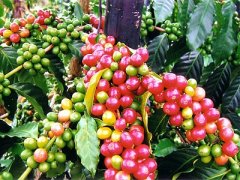
A brief introduction to Yunnan small Coffee the History of Yunnan small Coffee the Origin Cloud of Yunnan small Coffee
In 1892, French missionary Father Tian succeeded in growing coffee in a place called Zhukula in Yunnan. Up to now, there are still 24 coffee trees which are more than 90 years old in Zhukula Township. Zhu Kula is a mysterious, legendary and beautiful natural village, which belongs to the Zhukula Village Committee of Pingchuan Town, Binchuan County, Dali Prefecture. It is located on the banks of the Yubao River, a tributary of the Jinsha River. It is a Dali Prefecture, Chuxiong Prefecture and Lijiang.

The History of Coffee in Yunnan when did China begin to grow coffee beans
The History of Coffee in Yunnan when did China begin to grow coffee beans during the period of the Republic of China, the Catholic Church still sent Father Xu, Father Gu and Father Duan to Binchuan. These missionaries taught the villagers to read the Bible, set up a church primary school, and brought basketball. Although missionaries are different, they all like to drink coffee, and they continue to grow seedlings and expand the territory of coffee trees. But...

Yega Snow Coffee Bean Story: Starbucks Yega Snow Coffee Snow Tu Village is delicious? How do I buy Yejia snow coffee?
Professional coffee knowledge exchange more coffee bean information please follow the coffee workshop (Wechat official account cafe_style) where do you know the place name of Yejasuffe? First of all, let's take a look at the old saying that Yega Yirga is to settle down and Cheffe is a wetland, so Yega Chefe means to let us settle down in this wetland. Yejasuffe Yirgacheffe is located in Africa

Hangzhou Wisdom Tree Cafe is always slow, but no matter how impatient guests are, they never complain.
Professional baristas Please follow the Coffee Workshop (official Wechat account cafe_style) not long ago, a coffee shop in Japan moved the world to this cafe, where the waiters were grandmothers suffering from Alzheimer's syndrome and always served the wrong dishes, but no one ever complained. As a matter of fact, there is also such a coffee shop in Hangzhou that does not follow the routine: making coffee,

Stop drinking! Weight loss coffee problems frequently, but the little red book is still hot?!
Today's food, as long as it is related to weight loss, sales volume will not be poor. Since the fine coffee culture was promoted, many research literature and articles on the Internet have indicated that drinking coffee can reduce weight, but only if it is black coffee without sugar and milk, and it needs reasonable eating and proper transportation.

Where was coffee first grown in China?
Where was coffee first grown in China? According to historical materials, in 1902, a French missionary, a priest named Tian Deneng in Chinese, introduced coffee trees into a village called Zhu Kula in Binchuan County, Dali, Yunnan Province, and successfully planted them. Since then, coffee trees have been introduced to all parts of Yunnan, and have achieved great success. Therefore, the ancestor of Chinese coffee species is in Zhu Kula village, but it is a pity that when

Wenshan's own roasting Cafe Taiwan Cafe
The Song of sad Cafe by Zhu Shaolin, a roasting cafe in Wenshan, is the common memory of many people. Twenty years ago, she wrote the best-selling 500000-volume novel based on Wen Shan Coffee. Up to now, the cafe still retains the appearance of the time, with wooden tables and chairs revealing the years. On the wall, there is a big poster of Tsai Ming-Liang's film "what time on your side", with Lu Yijing and other major actors on it.

Starbucks increases the pace of expansion in China
New York, Economic Daily (Reporter Zhu Jun) due to being optimistic about China's economic development, Starbucks recently raised his target in China and plans to open 5000 stores in China by 2021. Howard Schultz, chairman and chief executive of Starbucks, said in an interview that there is no doubt that China will overtake the United States one day. The Chinese market will become better than the American market over time.

Introduction to the flavor and taste of Milasu coffee raisin honey in Tarazhu producing area of Costa Rica
For more information about coffee beans, please follow the front street of Coffee Workshop (official Wechat account cafe_style)-about Milasu from Tarazu producing area. Milasu is made from four kinds of raw beans, specially processed with raisin honey, making the mouth full of tea, citrus and a charming dried fruit finish. Tara Zhu Milasu, Costa Rica

Yunnan small Fine Coffee Bean introduction Iron Card Fine Coffee China Yunnan Coffee
Although Zhu Kula is poor and backward, it has an inextricable bond with coffee. In addition to growing coffee all over the country, the villagers all have a tradition of drinking coffee: self-growing, self-grinding and self-brewing, and now men, women and children in the village have the habit of drinking coffee. The villagers here have a special feeling for coffee trees, even if the coffee beans do not bring them any economic benefits.

Introduction to the History of Coffee planting and Coffee Manor in Costa Rica the meaning of FANCY Certification and SHB
Professional barista communication please follow the coffee workshop (Wechat official account cafe_style) Today we are going to talk about Costa Rica. Costa Rica is an important producing country in Central America, among which Tarazhu is a well-known producing area. In modern times, with the vigorous development of the coffee industry, I think there is less and less coffee in a certain country.

Costa Rica Tara Zhu production area extremely hard beans European ep standard red honey treatment what does it mean?
Professional barista communication Please pay attention to the coffee workshop (Wechat official account cafe_style) what information is contained in the name of coffee? Take chestnut, coffee name: Costa Rica Tarrazu SHB EP Red Honey, [country + producing area + graded name + treatment method] translated: extremely hard beans from Tarazhu, Costa Rica, European ep standard red honey treatment of raw beans.

Tara Pearl producing area of Costa Rica | Rio Jorco Old Manor Honey treats Kaddura and Kaduai
Professional coffee knowledge exchange more coffee bean information please follow the coffee workshop (Wechat official account cafe_style) Costa Rica Tara Zhu production area | Rio Jorco ancient manor honey treatment Kaddura, Kaduai flavor? Costa Rica is the most stable coffee in Central America. Coffee production has a very long history and has been exported to Britain as early as the 19th century.

55 farmers in Qiongzhong were certified as baristas.
Yinggen, 15 Jun (Reporter Wang Peilin, special correspondent Li Dahui, correspondent Zhu Dequan) after getting the national primary barista qualification certificate, our cooperative will open a coffee station, and I will be the barista, so there is one more way to increase income. Today, Huang Hui, the fifth team of Changxing Village, Heping Town, Qiongzhong Li and Miao Autonomous County, told reporters excitedly. There have always been coffee growers in Changxing Village in Qiongzhong.
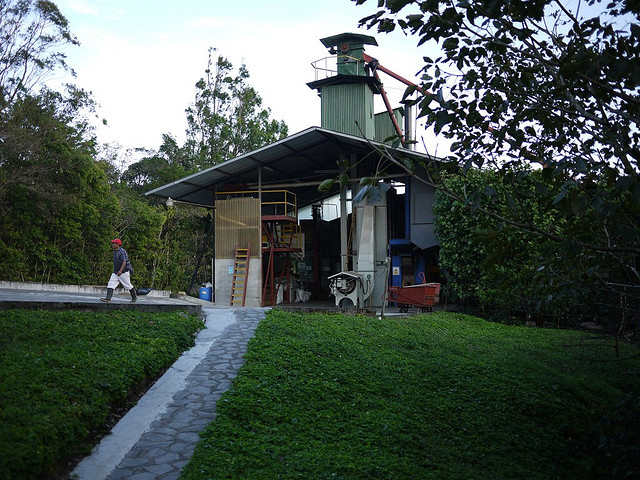
Where was coffee first grown in China? China Yunnan Coffee Yunnan purchases Coffee Raw Materials
Where was coffee first grown in China? According to historical materials, in 1902, a French missionary, a priest named Tian Deneng in Chinese, introduced coffee trees into a village called Zhu Kula in Binchuan County, Dali, Yunnan Province, and successfully planted them. Since then, coffee trees have been introduced to all parts of Yunnan, and have achieved great success. Therefore, the ancestor of Chinese coffee species is in Zhu Kula village, but it is a pity.

Former employees control the salary discount during the Manner coffee epidemic! Manner response will be held responsible
Calculate and pay the basic salary per hour; in 2.4 months, there is no lack of working hours, with a 20% discount on the Shanghai minimum wage (after paying social insurance and house fund) 2072 yuan. And let employees choose their own plan, and screenshot handwritten signature confirmation. The publisher said that the salary was paid on the 10th, and this Wechat screenshot was taken at 10 p.m. on the 5.9th.

Sumida Kawakawa Coffee, the source of Sumida Coffee, has officially become a supplier of Hangzhou Asian Games.
On April 12, Sumida Coffee Brand officially became the supplier of Hangzhou Asian Games! According to the information of the signing conference of the exclusive official coffee supplier for the 19th Asian Games in Hangzhou in 2022, the Sumida Coffee Brand is the seventh official exclusive supplier of Hangzhou Asian Games after Boss Appliances, Mona Lisa, Yaoguang, Yum China, Ox and Gu Home. Sumitagawa Coffee (TASO

The growth rate of South China market is as high as 30%-Kopi Luwak locates itself in the middle and high end market.
In addition, in order to meet more consumer demand and brand promotion, Kopi Luwak has not only pure high-end Kopi Luwak, but also medium-and low-end coffee with a selling price of about 20,30 yuan, and even instant coffee products. The ratio of high-end products to low-end products is 3:7. At present, cafes are polymorphic in China. In this context, Zhu Danpeng believes that coffee shops such as Starbucks and Pacific Cafe